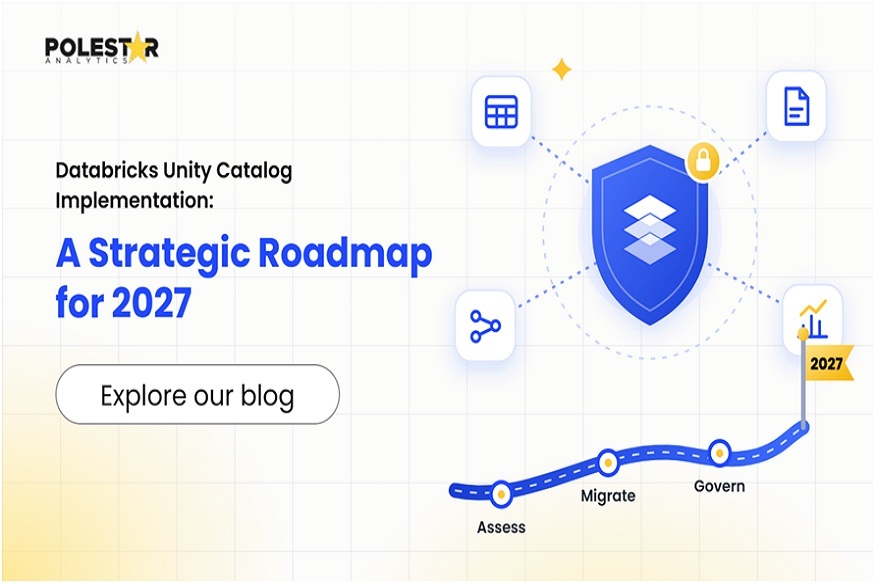
Our 2027 roadmap runs in four phases: design the foundation, migrate and cut over, add fine-grained and semantic controls, then govern AI assets. Most programs stall on ownership and culture long before technology bites, so name owners before you move a single table.
Why does Databricks Unity Catalog implementation matter more in 2027?
Here’s a deadline most data teams didn’t put in their plan. Since July 2026, Databricks has been switching off direct Hive metastore access for workspaces that don’t use it. Once legacy access stays off for 30 days, the workspace becomes Unity Catalog-only for good. There’s no undo button.
That would be a housekeeping story if governance weren’t now tied to AI results. Gartner found organizations with successful AI initiatives invest up to 4 times more in foundations such as data quality and governance. In the same survey of 353 data and AI leaders, only 39% of technology leaders were confident their current AI investments would pay off.
So a Unity Catalog implementation in 2027 is two projects in one: closing the legacy door, and building the governance layer your AI agents will lean on.
What does Databricks Unity Catalog architecture look like for enterprises?
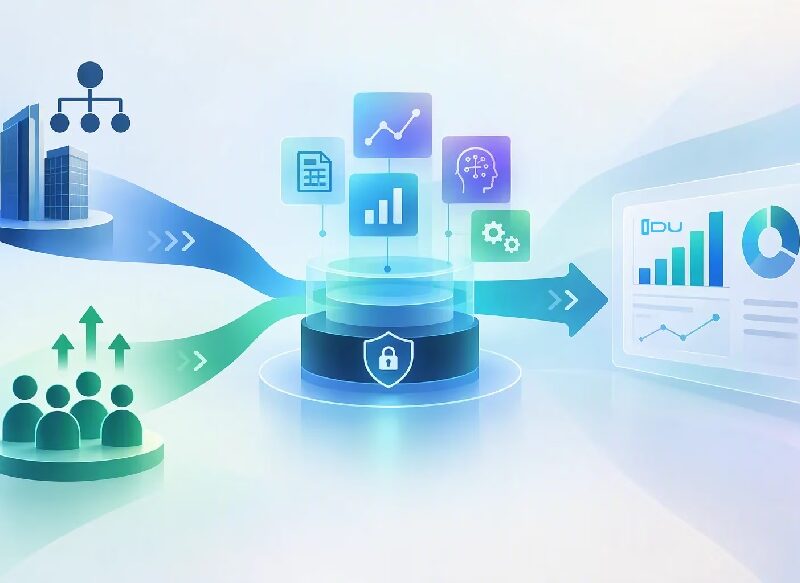
Think of Databricks Unity Catalog architecture as a family tree. At the top sits one metastore per cloud region, attached to every workspace in that region. Below it, catalogs usually map to a business unit or an environment. Schemas sit inside catalogs, and inside those live tables, views, volumes, functions and registered models. Identities live at the account level, so a group means the same thing in every workspace.
Two 2026 changes reshape that picture. Catalog Federation and a four-level namespace extend governance across accounts, regions and clouds, so one asset keeps one address. And the catalog now holds meaning as well as data: Unity Catalog Metrics for governed KPIs, Domains (generally available since October 2026) for business areas, and Unity Gateway for models, agents, MCP services and skills.
Read More: Who Is Responsible When AI Gets a Healthcare Decision Wrong?
You won’t be the first to build this. The platform underneath serves more than 20,000 organizations, 70% of the Fortune 500 among them.
Why do Unity Catalog implementations stall?
Rarely because of the tech. A Gartner survey of 223 data and analytics leaders, run in March 2026, found cultural resistance beat funding as the main reason governance initiatives fail, 60% to 40%. Teams skip ownership because it feels like paperwork. A few months in, nobody can say who approves access to the customer catalog.
The pressure isn’t easing either. Gartner’s 2026 CIO survey found 84% of respondents expect GenAI funding to rise this year, and Gartner predicts 50% of organizations will adopt zero-trust data governance by 2028 as unverified AI-generated data piles up.
Did you know? In IBM’s 2025 breach study, 63% of breached organizations had no AI governance policy or were still writing one.
That’s the real case for enterprise data governance in 2027. More AI money is arriving, and it lands on whatever catalog you already have.
How to implement Unity Catalog in Databricks: a 2027 roadmap in four phases
Here’s the Databricks Unity Catalog implementation roadmap we’d follow, quarter by quarter. Treat the quarters as a guide for your Databricks Unity Catalog deployment strategy; big estates will stretch them.
- Design the foundation. This is how to set up Unity Catalog in Databricks properly: one metastore per region, account-level groups synced from your identity provider, and a catalog layout the business has signed off. Name catalog owners now.
- Migrate and cut over. Inventory the Hive metastore, move tables, rewrite jobs to three-part names, then switch off legacy access. More on this below.
- Add fine-grained and semantic controls. Governed tags, row filters and column masks through ABAC, then Metrics and Domains so a KPI means the same thing everywhere.
- Govern AI assets. Register models, MCP services, agents and skills in Unity Catalog and put Unity Gateway in front of them. Gartner found 71% of organizations expect to deploy agentic AI within a year, yet only 21% have agentic AI governance in place. This is the phase that gets you ahead of them.
At Polestar Analytics, the AI & Data Governance team starts Unity Catalog programs with the catalog design and ownership model, because those are the hardest decisions to reverse later. When a Unity Catalog rollout is part of a bigger platform move, they bringin MigrationStudio by Polestar Analytics. Its agents scan the source estate, flag orphan jobs nobody has switched off, and regenerate the target data model, so dead tables never make it into the new catalog.
How to migrate to Databricks Unity Catalog before the Hive metastore switch-off
Start with an inventory. UCX, the Databricks Labs toolkit, assesses workspaces and migrates groups, permissions and tables, though it ships without a formal support SLA. Put that in your risk log.
Then pick an upgrade path per table. SYNC suits external tables, deep clones suit managed ones, and the upgrade wizard handles smaller batches. Replace DBFS mounts with volumes and move jobs onto Unity Catalog access modes.
Switch off legacy access last. After 30 days disabled, the change can’t be reversed, and jobs still pointing at hive_metastore will fail. If a few tables really can’t move yet, Hive metastore federation lets you keep querying them through Unity Catalog while you finish.
Databricks Unity Catalog best practices: what to measure in 2027
Read More: Why Telephone Systems VoIP Solutions are Gaining Attention among Growing Companies
A Databricks governance framework only works if you can see it working. IBM found 97% of organizations hit by an AI-related breach lacked proper AI access controls, and a breach now averages $4.44 million. So track coverage as closely as completion.
| Metric | What it tells you |
| Legacy access | Workspaces that still have Hive metastore access on |
| Managed share | Share of tables that are managed rather than external |
| Ownership | Catalogs and schemas with a named owner |
| Tag coverage | Sensitive columns carrying governed tags |
| AI assets governed | Models and agents registered in Unity Catalog |
Two habits pay off early: grant to groups, never to individuals, and keep dev and prod in separate catalogs.
Frequently asked questions about Databricks Unity Catalog implementation
How long does a Databricks Unity Catalog implementation take?
It depends on how much still sits in the Hive metastore. A greenfield setup can be live in weeks. A large migration usually runs across several quarters, which is why this roadmap spans the full year.
Can Unity Catalog govern data outside Databricks?
Yes, to a point. Lakehouse Federation lets you register and query external sources such as Snowflake, BigQuery or AWS Glue under Unity Catalog permissions, and external engines can read Unity Catalog tables through open Iceberg and Delta APIs.
Is Unity Catalog open source?
Yes. An open source version of Unity Catalog is hosted by the Linux Foundation, and Unity Catalog Metrics is open too. The managed Databricks version adds features such as ABAC and Unity Gateway on top.